What Mine Site Rehabilitation Actually Involves in WA
Mine site rehabilitation is the work that happens after production stops, returning a site to a stable condition that can be handed back or put to another use. Decommissioning shuts the plant down. Rehabilitation is what makes the land usable again, and it is where most of the environmental exposure and programme risk sits.
This is what mine site rehabilitation involves on a Western Australian site, in the order the work happens, with two completed Focus Demolition projects as worked examples.
What mine site rehabilitation means, and who requires it
Rehabilitation and closure are a statutory requirement under the Mining Act 1978, which obliges tenement holders to lodge a mine closure plan and to revise and resubmit it across the life of the operation. Rehabilitation is measured by an outcome, not by an activity list. The site has to finish as a structurally stable landform capable of future productive use, with landforms, watercourses and drainage structures left in a condition that will hold.
Contamination is assessed separately. Where a site is affected, the works have to satisfy the Contaminated Sites Act 2003 and the Department of Water and Environmental Regulation (DWER). In practice an environmental consultant sets what has to come out and to what depth. The contractor removes it, has it classified, and disposes of it accordingly.
Three groups drive this work in WA: mining companies closing or relocating infrastructure, government departments and local authorities dealing with legacy contamination, and principal contractors preparing ground for a new build.
Decommissioning sits upstream of rehabilitation and is a separate scope with its own standards. We have covered the process of decommissioning a mine site in detail elsewhere. This article picks up from the point the plant is off.
What happens on site, in sequence
- Decommissioning and isolation. Plant is shut down and made safe before anything is dismantled. Pipelines are drained, equipment and parts are cleaned, and services are isolated. On an operating site this is staged around production so the rest of the plant keeps running. Mine site decommissioning is a scope in its own right and is often let ahead of the demolition package.
- Structural demolition. Redundant structures come down under a methodology written for that structure. Crane-assisted dismantling suits elevated steel. Mechanical shearing suits lower sections. Hydraulic rock breaker attachments deal with concrete footings. Mine site demolition inside a live plant is sequenced around exclusion zones and the operator’s shutdown windows rather than around the contractor’s programme.
- Contaminated soil removal. With the structures clear, the ground underneath can be assessed. Contamination found on WA mine and industrial sites includes hydrocarbons from oil and fuel spills, heavy metals, asbestos-impacted soils, acid sulfate soils and contaminated groundwater. Soil is sampled and tested, the affected material is classified, and it is then excavated and transported to a facility licensed to receive that waste class. Soil remediation is the stage most likely to move a programme, because the extent of the contamination is rarely fully known until the structures are gone.
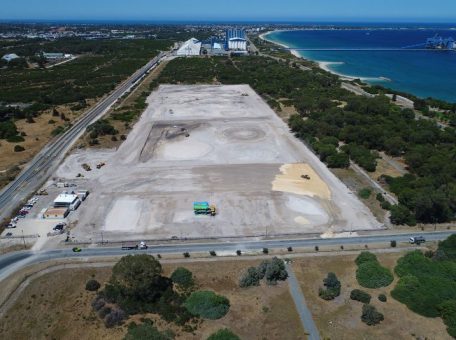
- Resource recovery. Steel, concrete and serviceable plant are separated before disposal is considered. On the Worsley diesel tank demolition, recovered steel was processed on site and transported to port for recycling, and all concrete was processed and sent to a recycling facility to be crushed into road base.
- Returning the site. The last stage is evidence. Landforms and drainage are confirmed stable, the remediation is documented against the plan agreed with the environmental consultant and the regulator, and the site is handed over in a condition suitable for future Greenfield Projects.
Worsley: demolition inside a live plant area
Focus Demolition completed the full demolition of a redundant Enhance Sands structure located within a live plant area at the Worsley mine site for South32. The 26-metre-high steel structure housed unused Jorde filters, which were carefully removed and repurposed rather than scrapped.
The structure came down in two stages. Crane-assisted dismantling handled the upper portions, from 26 metres down to 15 metres. Mechanical shearing with a 50-tonne excavator took the lower sections to ground level.
The constraint was the plant, which stayed in operation throughout. The project was completed with zero interruptions to the ongoing plant operations, on time and within budget.
A second South32 project at Worsley shows the soil side of the same sequence. On the Worsley diesel tank demolition, soil sampling and testing for hydrocarbon contamination was carried out alongside an environmental consultant, and once classified the affected soil was transported to a Class 3 landfill for safe disposal.
Worsley sits in WA’s South West. Focus Demolition delivers South West demolition and remediation across Bunbury, Collie, Busselton and Margaret River.
Kalgoorlie: contaminated soil removal against a fixed deadline
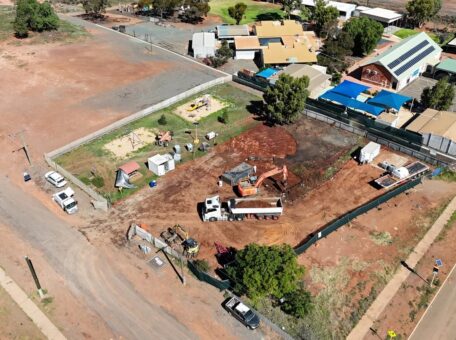
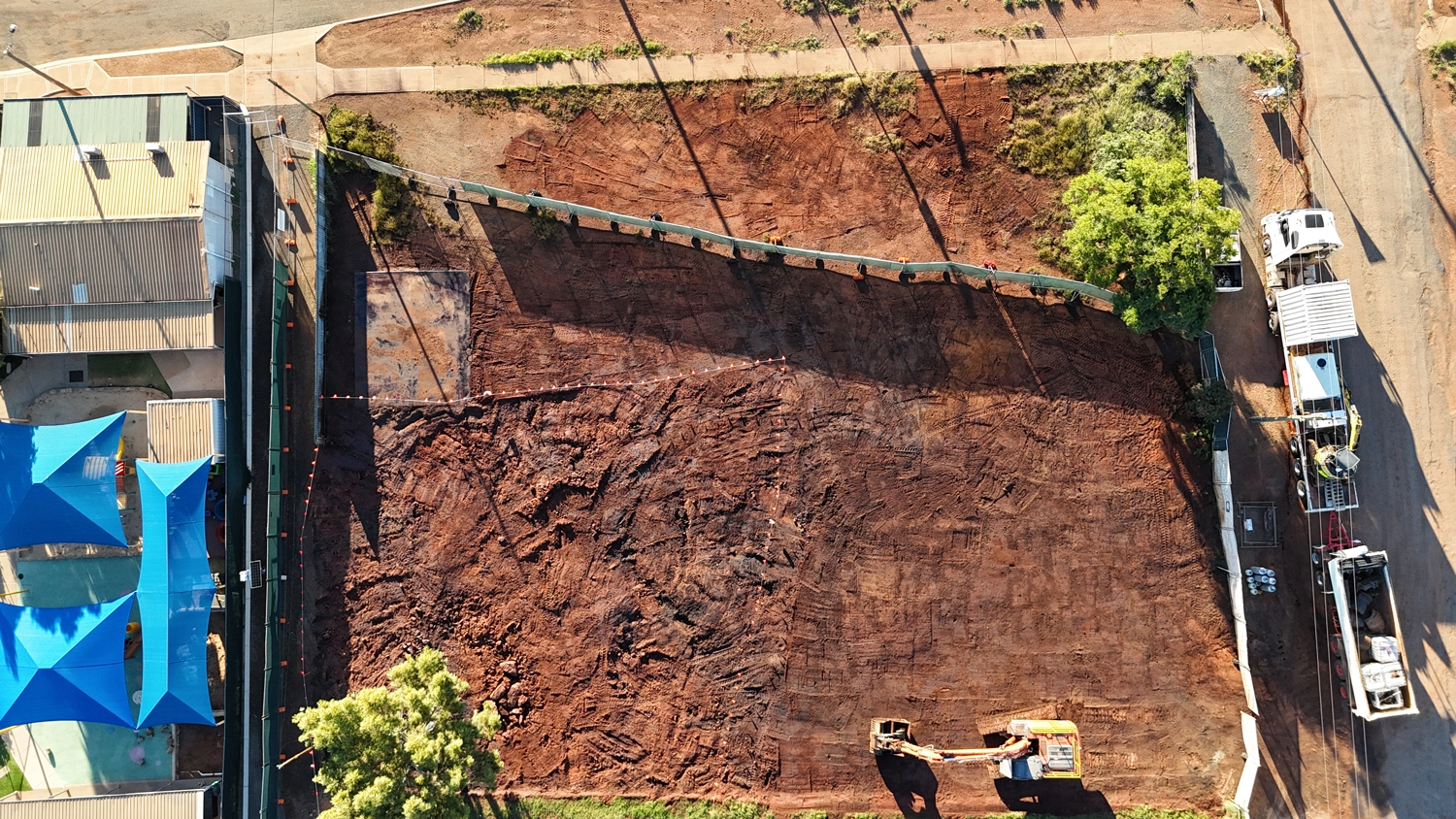
Focus Demolition was contracted by Northern Star to complete the decontamination and site clean-up of a block in Kalgoorlie contaminated with heavy metals such as arsenic and mercury. The block sat close to a primary school that needed to reopen as soon as possible, and that set the programme.
The remediation plan was developed with an environmental consultant, DWER, the Department of Education and the Shire of Kalgoorlie. That is the normal shape of a contaminated soil removal job in WA. The contractor does not set the standard alone.
The soil was removed and disposed of on the accelerated schedule the school’s reopening required. The project was completed on schedule.
Kalgoorlie draws on the same regional capability as the rest of the Goldfields, where Focus Demolition also demolished the redundant fine ore bins and conveyor system at Northern Star’s Goldfields superpit.
What a completed rehabilitation should leave behind
Judge the work on the state of the site at handover, not on the method statement. Three things are checkable:
- The structures are gone and the landform is stable.
- Contaminated material has been sampled, classified, removed and disposed of, with the documentation to prove it.
- The site is in a condition suitable for future Greenfield Projects.
Focus Demolition has delivered mine site demolition and rehabilitation across regional Western Australia since 2008, in the Pilbara, the Goldfields, Meekatharra and the South West, for clients including South32, Northern Star and Westgold. We are certified to Environmental Management System ISO 14001:2026 and DWER-approved for soil remediation.
Planning a closure, a decommissioning or a site handover? Contact Focus Demolition to discuss the site and what rehabilitation will involve.